The film industry has always gained a huge fan base all across the world, whether talking about an actor showcasing their skills and making the movie engaging, or a director giving proper direction to the scenes, or video editors giving their best to enhance the visuals, or a production team putting in a deserving effort and amount of money to present the final output, the movies have never lost their sparking engagement, but has always attracted more and more viewers.
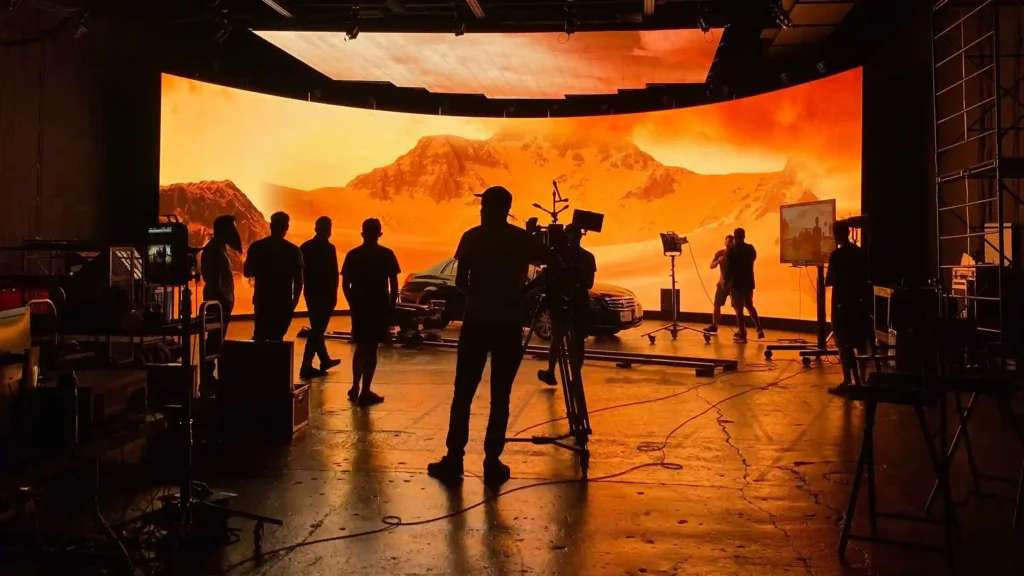
Turning a written script into an engaging story with the best-in-class visuals is not a cup of tea or one man’s job; filmmaking has always been a complex and long process that require time and patience with appropriate creative insticts, including casting, production, direction, editing, and post-production, which requires a lot of time, effort, and coordination of each member at every stage.
Table of Contents
How is AI in filmmaking used?
AI in filmmaking has simplified the entire process for almost every part of the production team, whether we talk about scriptwriters taking suggestions for exclusive storylines from AI, or video-editors taking the help of AI in generating a scene from scratch, blending the colours, or framing motion graphics, and so on. The film industry is undergoing a major transformation in 2026 as a result of AI in filmmaking and advanced digital technologies. AI in filmmaking has helped the studios’ desire to make the movie even faster while not compromising the quality of the film.
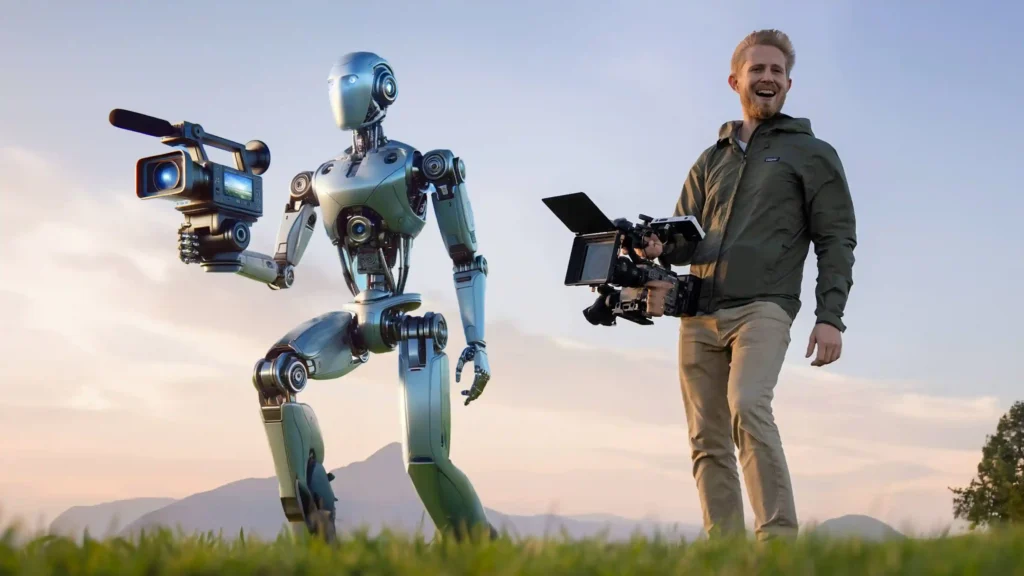
Artificial intelligence has become an active contributor among filmmakers, which is being effectively used in scriptwriting, casting decisions, and even in the post-production phase. AI in filmmaking is reshaping the movie-making process and how movies are created, how stories are portrayed, how visuals appeal to the audience, and how more engaging and breathtaking twists and endings are introduced in movies. The overall experience of cinephiles has been increased by introducing artificial intelligence in filmmaking.
AI in scriptwriting: From ideation to story
In filmmaking, scriptwriting has always been the hardest part; the traditional approach of writing a script was not only difficult but also very time-consuming. For instance, Imtiaz Ali took a long time before making Rockstar in 2011 with Ranbir Kapoor. The engaging scripts were a result of deep thinking, the ability to observe the world uniquely, portraying dramatic plots with unexpected twists, refining the dialogues, understanding emotional aspects, and so on.
For You: Top 12 Bollywood movies that will never get old
With the rise of AI in filmmaking, the process has really been shortened, and AI in filmmaking has become a great helping hand for writers. Writers are using AI to generate multiple story directions, draft dialogue, generate character concepts, or a preferred genre for an idea within minutes. By providing the required prompts for the idea, the target audience, the production budget, and preferred direction style, a writer can have multiple story variations within minutes, which helps reduce the required time in filmmaking, which was not possible with traditional writing in such a small timespan.

The traditional Bollywood scripts like Kabhi Khushi Kabhi Gham or Dilwale Dulhaniya Le Jaayenge, which were purely written manually, and writers spent months on defining characters, building a storyline, the scripts were mostly emotionally focused, covering the depth of family values.
Considering the AI in filmmaking, the storylines of new Bollywood movies have now been transformed with more experimental ideas, taking an example of Teri Baaton Mein Aisa Uljha Jiya, one of the movies showcasing the transformation artificial intelligence has introduced in scriptwriting, although the script is not entirely generated by AI, but exploring a whole new experimental concept of creating a love angle between artificial intelligence and human shows AI involvement in scripting breaking the long lasting chain of sticking the Bollywood scripts to basic emotional takes with family values.
Hollywood has also started actively involving AI in scriptwriting, talking about one of the recent movies, The Creator, which showcases AI-assisted creativity with more data-driven storylines than previous traditionally created scripts like Titanic and The Godfather, that prioritized emotional aspects as the scriptwriting was totally dependent on the writer’s creativity and manual revisions. The Creator has used a futuristic concept of AI vs human conflicts, which shows the involvement of AI in scriptwriting by expanding the genre and storytelling approach. AI in filmmaking creativity is not limited to emotions in storytelling, while it helps provide story variations by exploring entirely new and experimental concepts, making the scriptwriting not only easier than traditional manual writing but also more creative.
AI in cinematography and Visual Perfections
Scripting is the initial step, and turning the script into an engaging visual representation is one of the crucial steps in filmmaking and cinematography. Traditionally, cinematography was totally dependent on manual skills and expertise, including adjusting the cameras in perfect places to capture perfect shots. But AI involvement in cinematography has transformed the procedure to be more precise and efficient. With the help of AI in filmmaking tools, cinematographers can have suggestions regarding optimal camera placements and movements for capturing smooth and dynamic shots, maintaining focus, and tracking a subject as per their genre and storyline.
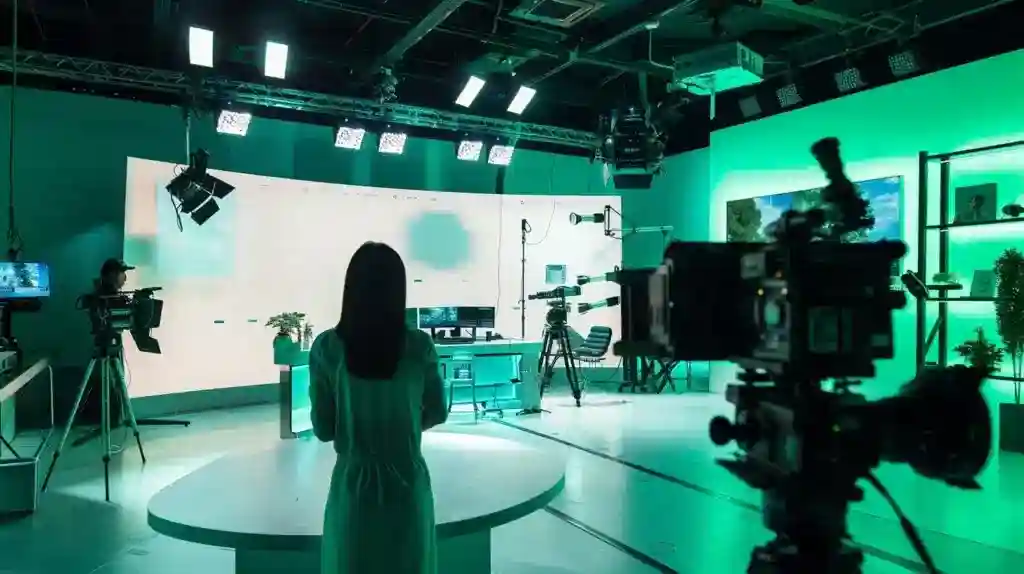
AI in cinematography helps by providing screen framing suggestions, which is one of the crucial steps taken in filmmaking. A perfect screen framing is necessary to grab the audience’s attention, not only the camera adjustment, but also subject placement, background elements that can enhance the visual, and align with the script, leaving fewer chances of error. Lightning has always been a difficult aspect to satisfactorily cover by cinematographers. With the help of AI in filmmaking, it has been easier, as AI helps by providing recommendations of colour coding, colour tones, brightness, and contrasts as per the script requirements and environmental conditions.
For You: The Dark Side of the K-pop Industry: Mental Health And Industry Pressure
AI in filmmaking is helping to improve camera angles, capture perfect shots, and deliver spectacular visual output of the scripts. Overall, AI in cinematography has become a great helping tool for cinematographers, helping them enhance the visuals in modern filmmaking, while keeping the human creativity intact and leaving a lesser probability of errors.
AI in Post-Production: Colour Grading, Editing, and VFX
After the completion of shooting the script, the film is still not ready, the major part of filmmaking is remaining, which includes colour grading (Enhancing the brightness, contrast, lightning and also keeping a consistent colour grading throughout the scene), editing (Finalizing the scenes and rejecting few others, resulting in a film consisting only perfect shots and required scenes eliminating unwanted scenes), and VFX (Producing high-stakes visual effects without the need of large physical sets and reducing production costs).
Post-production steps are as crucial as the production steps in filmmaking, as they will be responsible for delivering the final output with the best visuals and eliminating errors and unwanted scenes, but traditionally, these steps of post-production took a lot of time, effort, and precision, which has been reduced in modern filmmaking with the help of artificial intelligence.
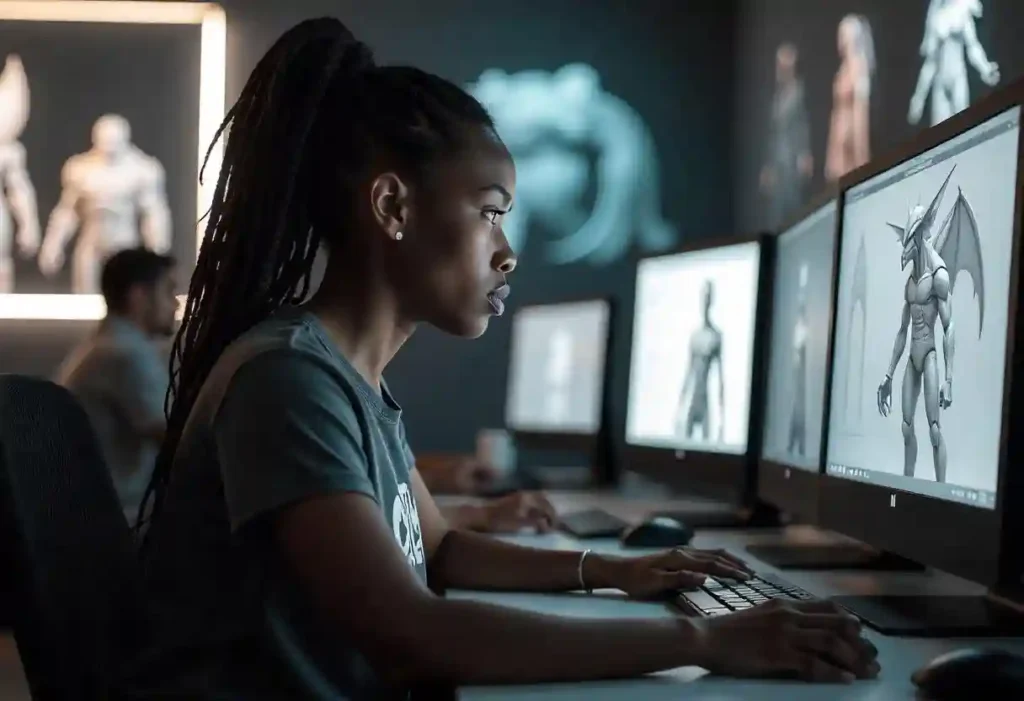
In films like Gangubai Kathiawadi, colour grading was done manually with a strong artistic vision, and every frame was carefully adjusted to align with the script. The process of manually adjusting grading on each frame was highly time-consuming and required detailed corrections and effort. AI in colour grading has been a great help for video editors by providing AI-driven tools for analysing each frame and suggesting colour palettes based on the script instantly, maintaining consistency across the scenes, allowing more time for video editors to focus on more creative refinements.
Editing has also been a less consuming process with the help of artificial intelligence. AI in filmmaking tools helps to reduce redundant tasks by automatically eliminating scenes based on pacing and continuity, applying smart transitions between clips, removing background noise, and enhancing the audio quality. By getting help from AI in completing repetitive technical work, the editors are allowed to focus more on creative storytelling and narrative flow, enhancing the overall quality of the film and narrative.
Apart from these, VFX has helped the production team a lot in reducing the production cost by generating high-resolution, spectacular, and stunning virtual visuals, eliminating the requirement of creating costly environments. AI in filmmaking has introduced the most impactful achievements in visual effects, as it can generate realistic and large backgrounds with vast crowds, bypassing the need for having large and expensive physical sets.
For You: Hand-Picked Bollywood Netflix Originals
AI in Voice & Dubbing
As AI in filmmaking has enhanced the quality of the storyline and visual representations, the movies are expanding into different regions, gaining a larger fan base in different languages. Previously, in traditional filmmaking, the filmmakers preferred dubbing the film in multiple languages to serve a vast region, that involves hiring voice artists for different languages. This procedure was not only time-consuming but also expensive, and in most cases, due to debugging, the delivery of dialogues was not aligned perfectly with the visuals, affecting the overall quality of the movie.
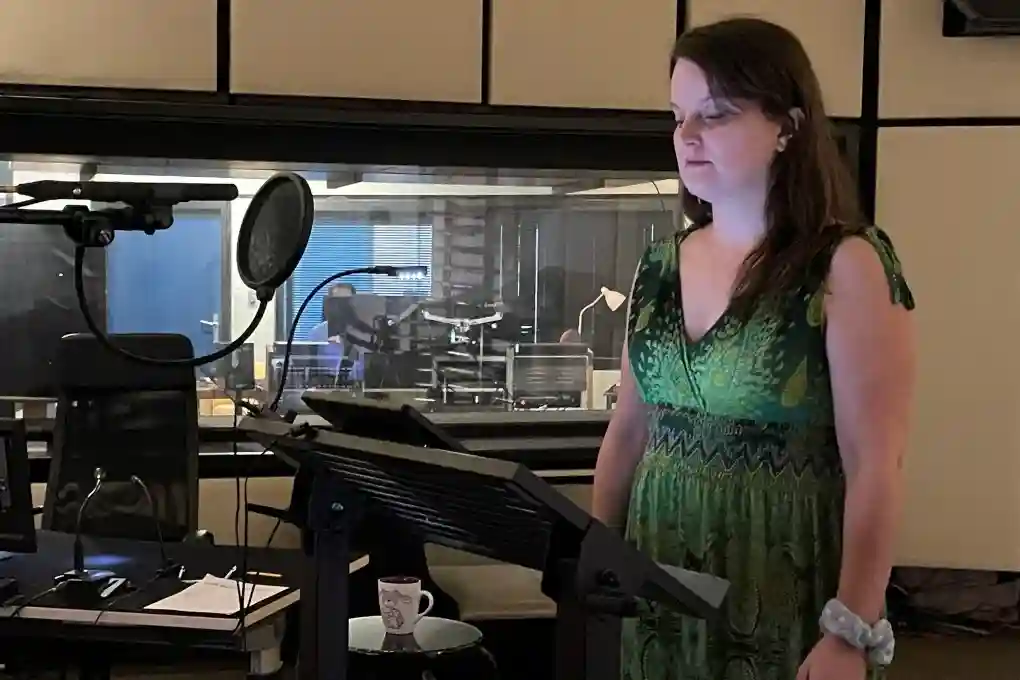
In modern filmmaking, AI-driven tools are available that are capable of adapting new languages and dubbing the movie in different languages, satisfying the mood and script requirements of each frame, and maintaining the original quality of dialogue delivery. AI in filmmaking has not only advanced in adapting the language but has also learned voice cloning, in which it is capable of cloning the actual voice of an actor and putting that voice into the debugged version with a different language.
AI in filmmaking has helped the production team to globally launch the movie in a short span without investing a lot of money and time; overall, the language barrier has been significantly removed. This enhancement has helped the filmmakers in saving cost and time, and enlarging their audience’s region, but has also affected the job market for voice artists, making them suffer financially.
For You: Coachella 2026: Music, Craze, Lineup, And More
AI in Filmmaking: Shortcomings and Limitations
AI in filmmaking has been a modern approach to filming stunning films with experimental concepts, with reduced time and production costs. But, there are shortcomings also, as introducing a new generation of artificial intelligence, the industry has faced scarcity for jobs, making it concerning for the artists who are either in their struggling phase or even has already gained success, both categories are in danger. As AI in filmmaking can clone the voice, actor recreation can also be achieved with better movements. In the future, it is possible that AI can take over the actors, making them suffer financially.
Not only are actors in danger, but also the voice artists, video editors, and even cinematographers are in a concerning bubble. AI in filmmaking has not yet taken over the profiles, but it is growing its learning and enhancing its abilities, making it concerning for the industry to take over maximum roles.
AI in filmmaking tools has helped enhance the audio and visual quality, offering VFX, better lighting, and an experimental storyline, but it has failed to satisfy the emotional aspects. As the traditional filmmakers and manual script writers were more focused on satisfying the emotional aspects, whether it’s about family values or relationship struggles, emotional attachment with their materials or many more concepts, but the AI involvement has compromised with emotional values in the film, which is resulting the group of cinephiles, who likes watching emotionally fulfilling movies, to dislike modern films due to transformation of storyline being more focused on experimental and data driven concepts than emotional aspects.
For You: Avengers: Secret Wars Release Date, Storyline, and Expectations
Future Looks Promising with AI in Filmmaking
AI in filmmaking has started getting involved in most industries, whether it’s IT, HRM, or the film industry; there are both benefits and shortcomings. While making the work easier and faster, it is causing issues such as scarcity of jobs, lack of emotional aspects, and more errors than traditional methods if prompts are not provided effectively. AI in filmmaking can be considered a helpful tool for cinematographers, video editors, actors, voice artists, scriptwriters, and other filmmakers, but it has not reached the stage of replacing humans in filmmaking yet.
Frequently Asked Questions
How is AI used in movies?
The general use of AI in filmmaking has been seen in enhancing the existing scripts, generating a leftover scene, fixing the colour correction or colour grading in the movie, and more such tasks to make the movie more fulfilling and attractive to the audience.
What famous movies have used AI?
Popular movies like Iron Man, WALL-E, Terminator Salvation, The Day the Earth Stood Still, and more have portrayed the use of AI in the movie. However, these are some sort of technical movies and do not actually represent the integration of AI in the filmmaking process.
Is Bollywood using AI?
Yes, Bollywood has been increasingly trying its hand at the AI-powered filmmaking process. For instance, the AI-powered Mahabharat series was released by the OTT platform and loved by the audience for its breathtaking visuals and to-the-point storyline. Moreover, in a recent controversy, Ramayana: the movie has been criticized for generating war scenes with the help of AI despite having a large production budget.